Revisiting abrupt decompensation and selective brain vulnerability in thiamine-deficient mice
He Lab · Fudan University
Feb 2025 – Present
Research question: Why are some brain regions more vulnerable than others?
Abstract
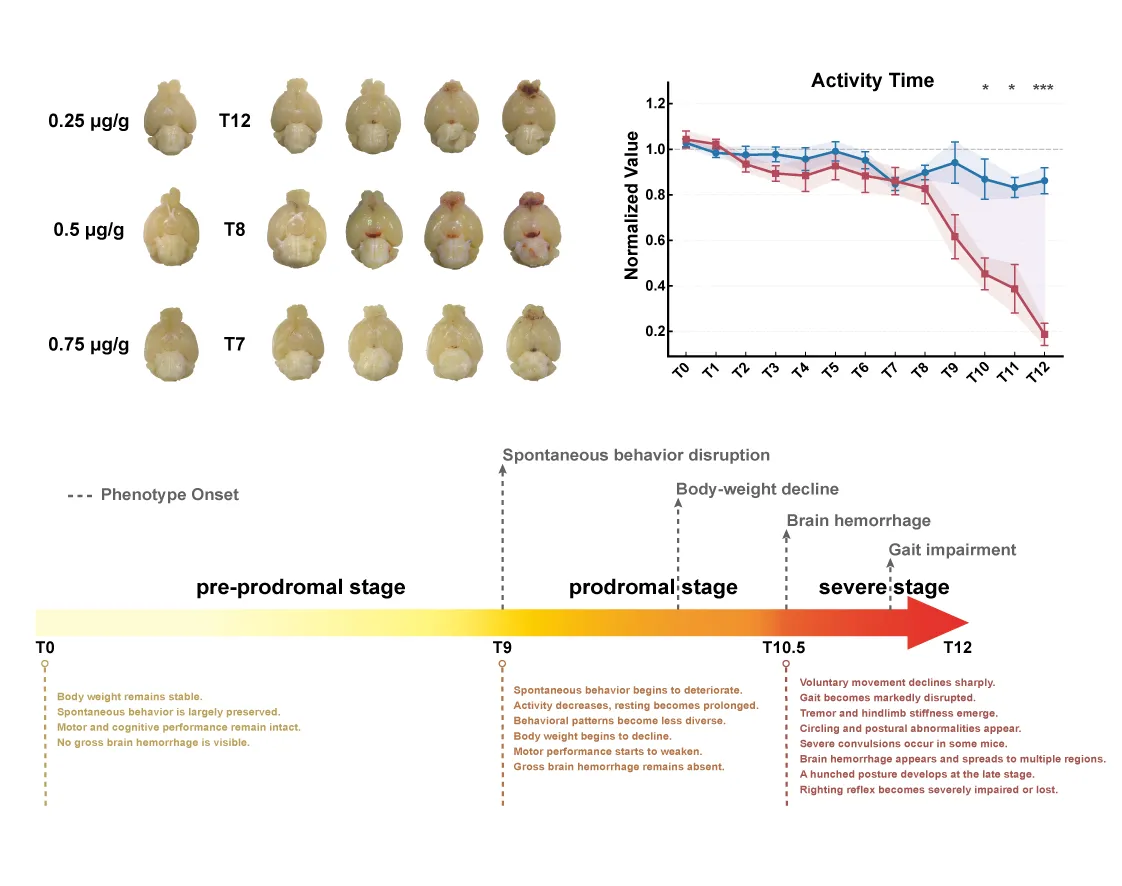
Thiamine deficiency causes severe neurological dysfunction with regional selectivity, yet how functional deterioration unfolds over time and why particular brain regions are preferentially affected remain incompletely understood. Here, we characterized pyrithiamine-induced thiamine deficiency (PTD) in mice using longitudinal behavioral monitoring, gait analysis, metabolic measurements, multiscale histopathological analysis, and brain-wide metabolic and vascular datasets. Across pyrithiamine doses, disease onset shifted in time while retaining a common trajectory consisting of a phase of relatively preserved functions followed by rapid behavioral and neurological decompensation. Higher-resolution home-cage monitoring detected abnormalities only modestly earlier than this transition, supporting early functional compensation. Brain pathology was spatially selective, with the mammillary body (MBO) among the earliest and most consistently affected regions. Vulnerable regions tended to exhibit high baseline glucose utilization and dense vascular organization, although these features did not fully account for selective vulnerability. Together, our findings frame PTD as a transition from functional compensation to rapid decompensation and suggest that regional vulnerability reflects the interaction between systemic metabolic failure and local tissue properties.