From Stress to the Gut: Dissecting the Neural Circuitry of Gastrointestinal Dysmotility
Oka Lab · Caltech
Apr 2026 – Aug 2026
Research question: How does stress change the body through neural pathways?
Abstract
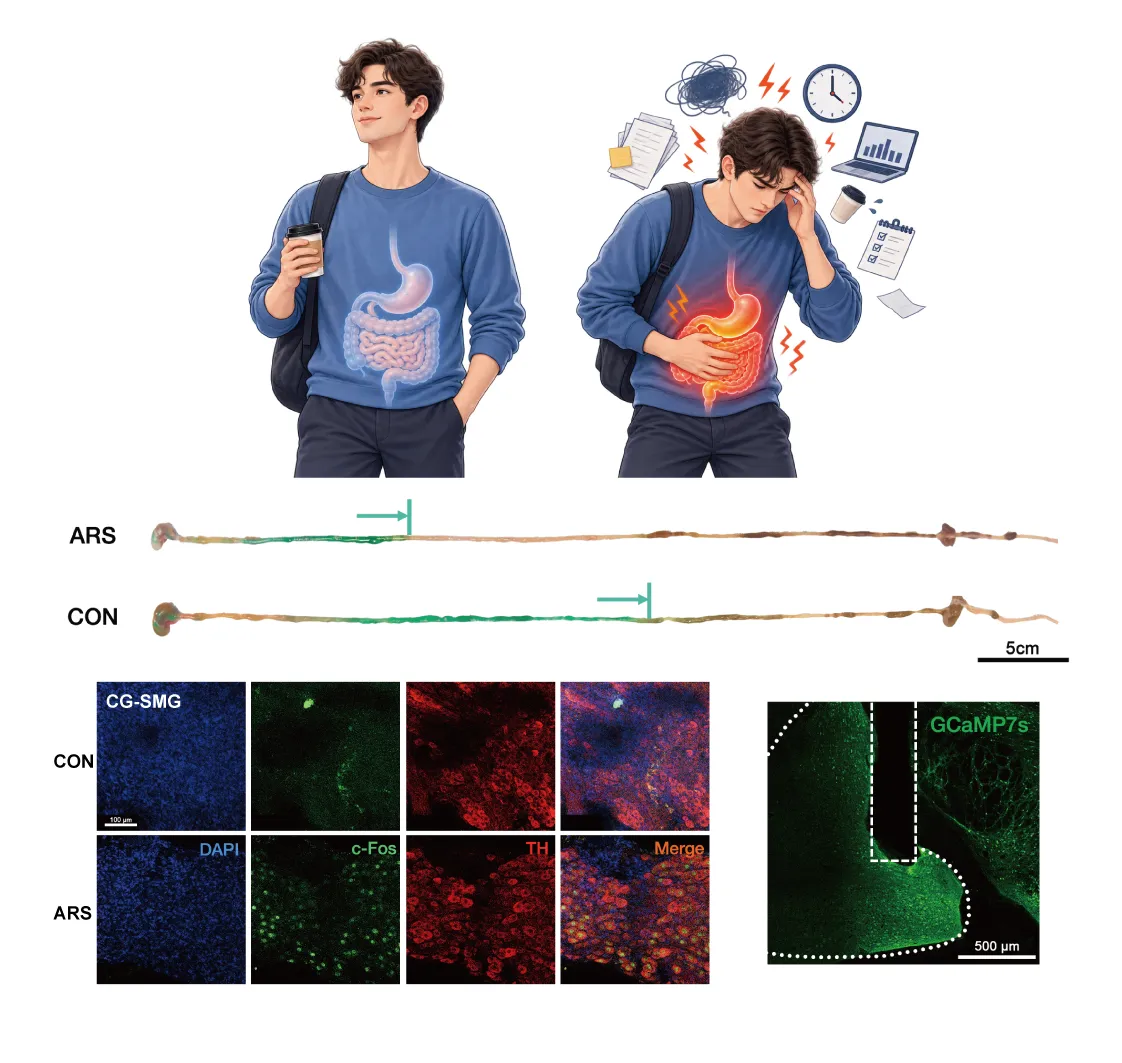
Stress alters gastrointestinal motility, but the neural pathways mediating these changes remain incompletely understood. Using acute and repeated restraint stress in mice, we combined gastrointestinal assays, c-Fos mapping, sympathetic denervation, and chemogenetic manipulation to investigate brain-gut signaling. Acute stress slowed upper gastrointestinal transit, increased fecal output, and delayed feeding initiation, accompanied by marked c-Fos expression in the celiac-superior mesenteric ganglion complex (CG-SMG) and medial amygdala (MeA). Peripheral sympathetic denervation with 6-hydroxydopamine partially attenuated these gastrointestinal changes, with a stronger effect on fecal output. Broad MeA activation did not significantly alter upper gastrointestinal transit or feeding latency under the tested conditions. After repeated restraint stress ended, fecal output was reduced during a three-hour observation period without restraint. These findings identify distinct acute and post-stress gastrointestinal phenotypes and support a contribution of peripheral sympathetic signaling to acute stress-induced dysmotility, while the central pathways and mechanisms underlying post-stress changes remain unresolved.