Targeting AAVR Expression for Improved Recombinant AAV Gene Therapy: A Drug Screening Approach
Ling Lab · Fudan University
Sep 2024 – Feb 2025
Research question: Can small molecules that modulate AAVR expression improve recombinant AAV transduction?
Abstract
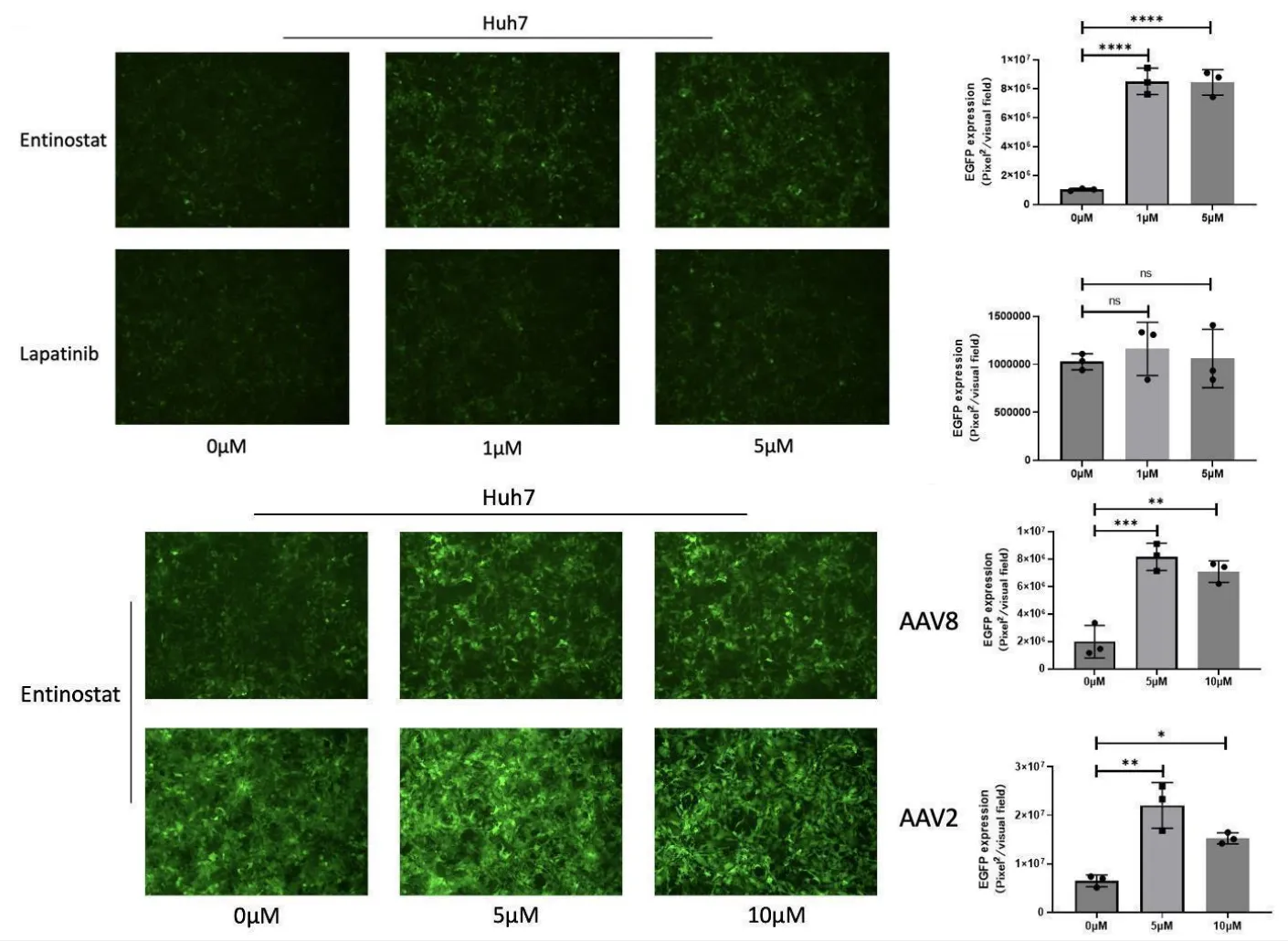
Gene therapy holds promise for durable correction of genetic defects, with recombinant adeno-associated virus (rAAV) as a leading vector, though limited transduction efficiency often necessitates high doses. Using L1000, the transcriptomic data of FDA-approved compounds, we identified 2,138 AAVR (KIAA0319L)-linked data entries and selected two promising candidates for following verifications. Entinostat (ENT), a benzamide HDAC inhibitor, significantly enhanced AAV2 and AAV8 transduction in Huh7 and HEK293 cells, whereas Lapatinib (LAP) was ineffective. Mechanistically, ENT upregulated AAVR and GPR108 in Huh7 but not in HEK293, where enhancement persisted even with AAVR-independent AAVrh32.33, indicating additional pathways. In vivo hepatic studies in normal mouse liver showed no significant change in AAV transduction or AAVR expression, consistent with the possibility that AAVR upregulation is restricted to cancer-derived cell lines. These findings support ENT as a potential adjuvant for rAAV delivery in specific cellular contexts and highlight the value of our L1000-based pipeline for identifying small-molecule enhancers of AAV transduction.